
 Featured
All anchors
Root, soul, and guide. Each hand-tied to order.
How to choose your first talisman
如何挑选你的第一件信物
A first talisman is not a purchase you should rush. The right one is the one you will still be wearing in three years. This guide walks through three questions: why you are buying, how it should sit, and what it should be made of.
第一件信物不该急着买。合适的,是三年后你还在戴的那一件。这份指南走过三个问题:你为什么买、它该怎么贴合你、它该由什么做成。
Start with the reason
从理由开始
Before you look at designs, ask why you are here. A bracelet bought as a gift carries a different intention than one bought for yourself in a hard year. If it is for you, name the thing you are working with: patience, grief, a new beginning, a slow return to steadiness. That word will decide more than any color chart.
在看款式之前,先问自己为什么来。作为礼物买下的手串,和在一个艰难年份为自己买下的手串,承载的意图并不一样。如果是为你自己,请说出你正在面对的那件事:耐心、失去、一个新的开始,或者一次缓慢的回到平稳。这个词,比任何配色表都更能决定你的选择。
If it is a gift, think about the person's habits rather than your taste. Does she wear jewelry daily or almost never. Is his work with his hands or at a desk. A quiet, plain piece suits most people and most occasions, because it makes no demand and draws no attention. When you are unsure, choose the design that says the least.
如果是送人,请想对方的习惯,而不是你的喜好。她每天戴饰品,还是几乎不戴?他的手是干活的,还是伏案的?安静朴素的款式适合多数人、多数场合,因为它不索取,也不引人注目。拿不定主意的时候,就选说得最少的那个设计。
Size and fit
尺寸与佩戴
Measure your wrist with a soft tape or a strip of paper, snug but not tight, just below the wrist bone. Add about one centimeter for a comfortable fit, and two if you like the beads to move freely. Beads of eight millimeters suit most wrists. Smaller beads read as more delicate and are easier to wear all day under a sleeve.
用软尺或一条纸带量手腕,贴而不勒,位置在腕骨下方。再加一厘米左右比较舒适,如果你喜欢珠子滑动手感,就加到两厘米。八毫米的珠子适合多数手腕。珠子更小,观感更细致,也更容易整天藏在袖子里佩戴。
Fit matters more on a talisman than on ordinary jewelry. It will be with you in meetings, in sleep, and at the sink. A size that presses will end up in a drawer within a month, so when you are between two sizes, take the larger one. A loose bracelet can be adjusted, and a tight one cannot. For gifts, size is the one thing you cannot guess well. If you do not know the number, choose an elastic cord, which stretches across a small range, or a design with a sliding knot.
对于信物,贴合度比普通首饰更重要。它会在会议里、睡梦里、水槽边陪着你。会压手的尺寸,不出一个月就会被放进抽屉,所以在两个尺寸之间犹豫时,选大的那一号。松了可以调,紧了没办法。如果是送礼,尺寸是你唯一猜不准的事。不知道具体数字时,就选弹力绳,它可以跨过一个小范围;或者选带滑结的款式。
Material and meaning
材质与含义
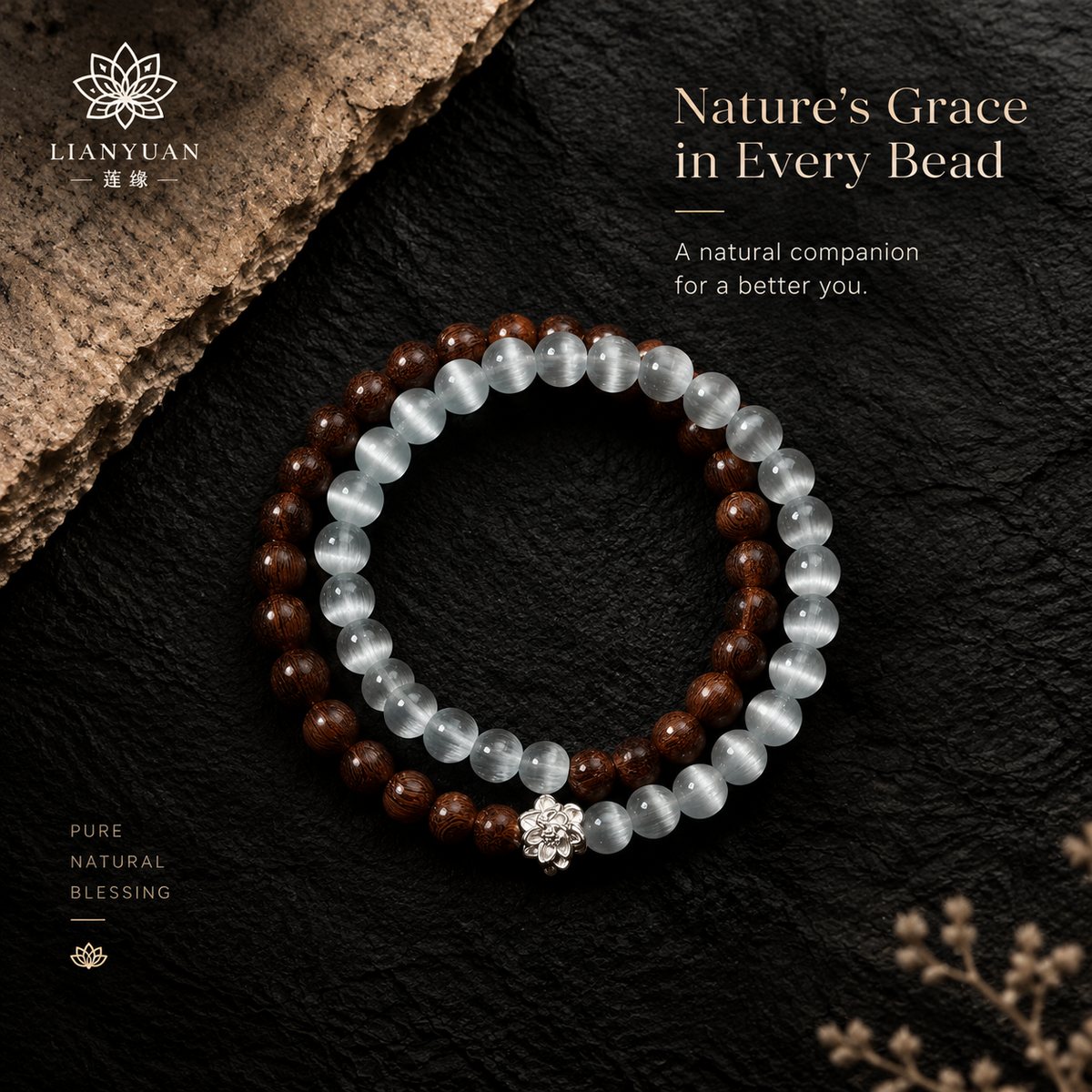
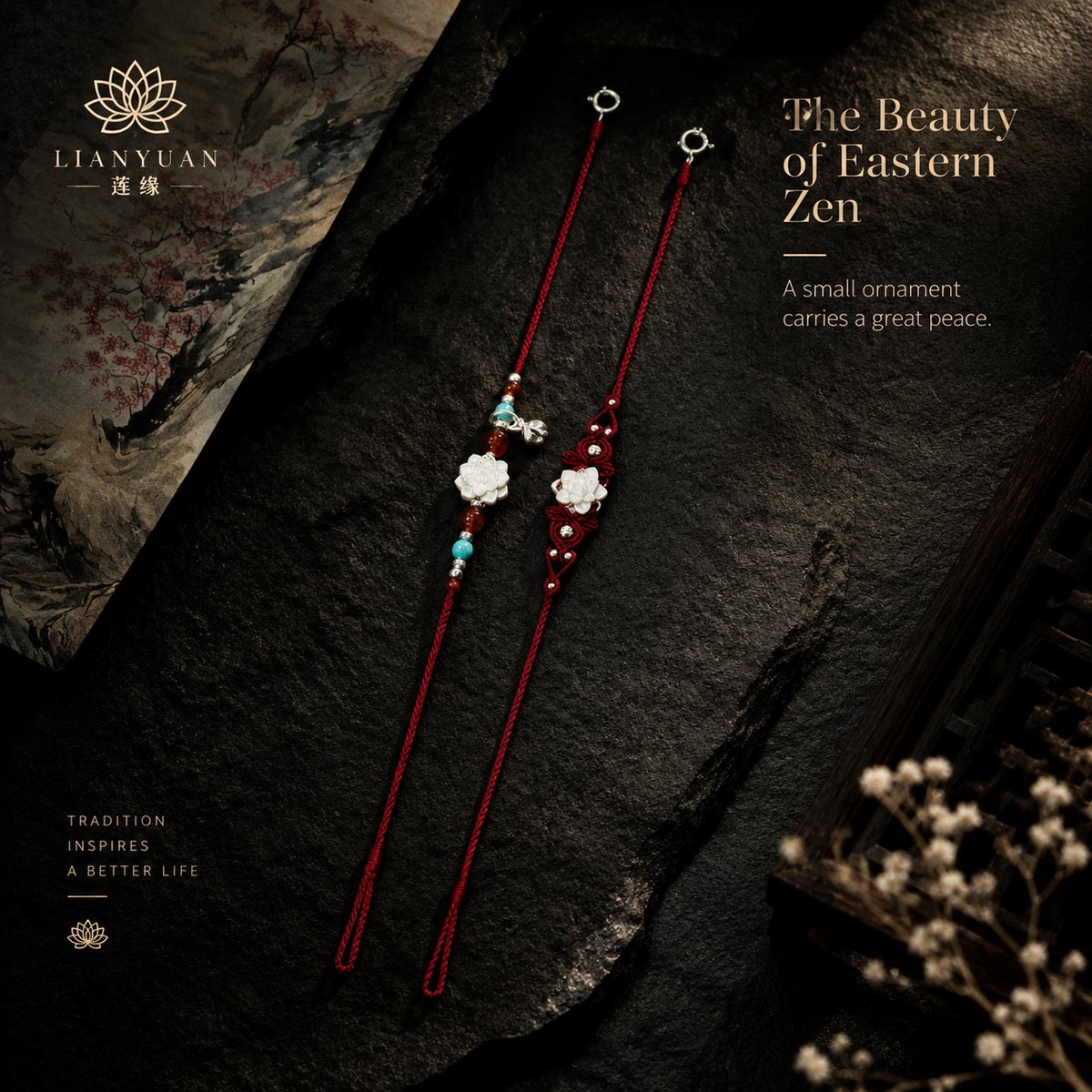
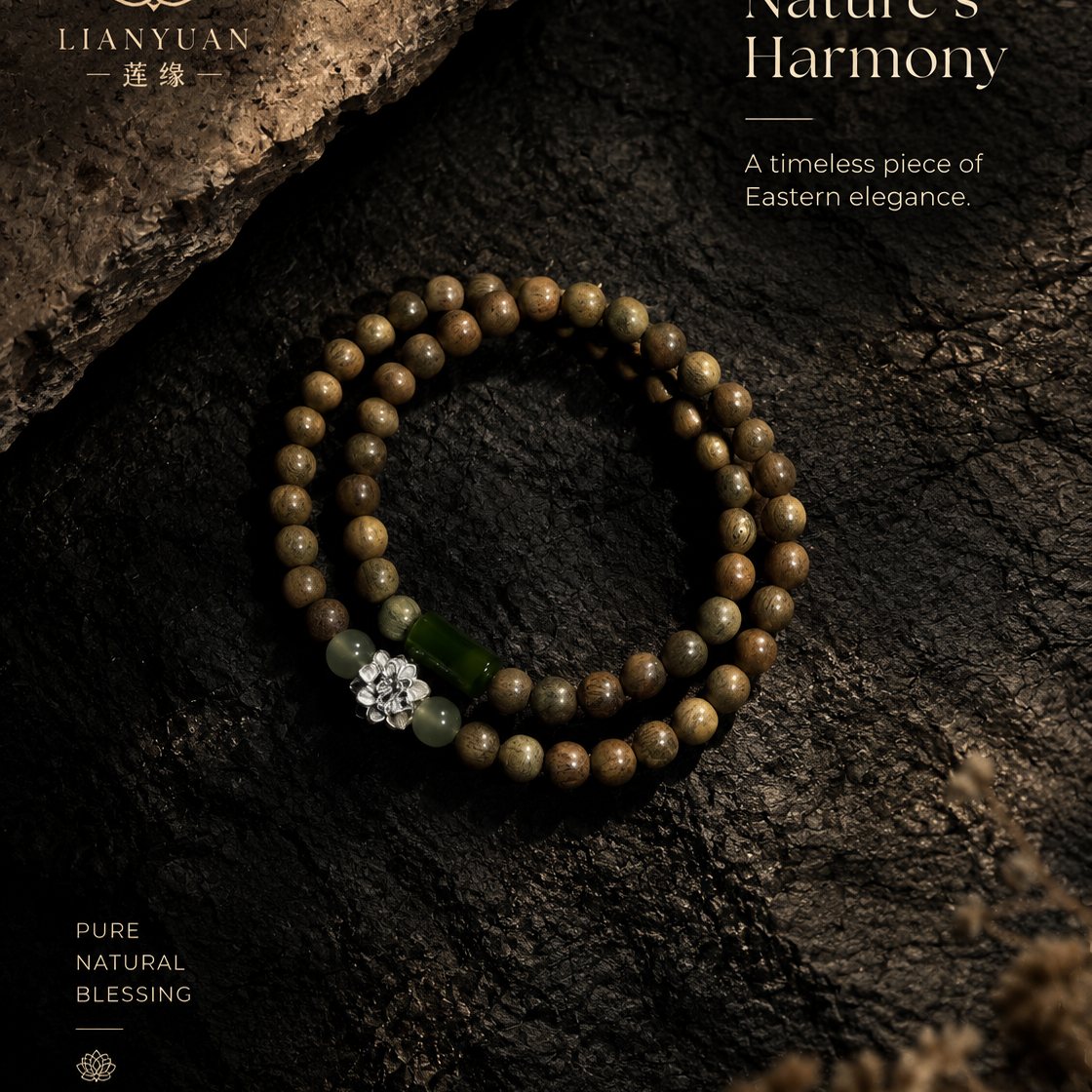
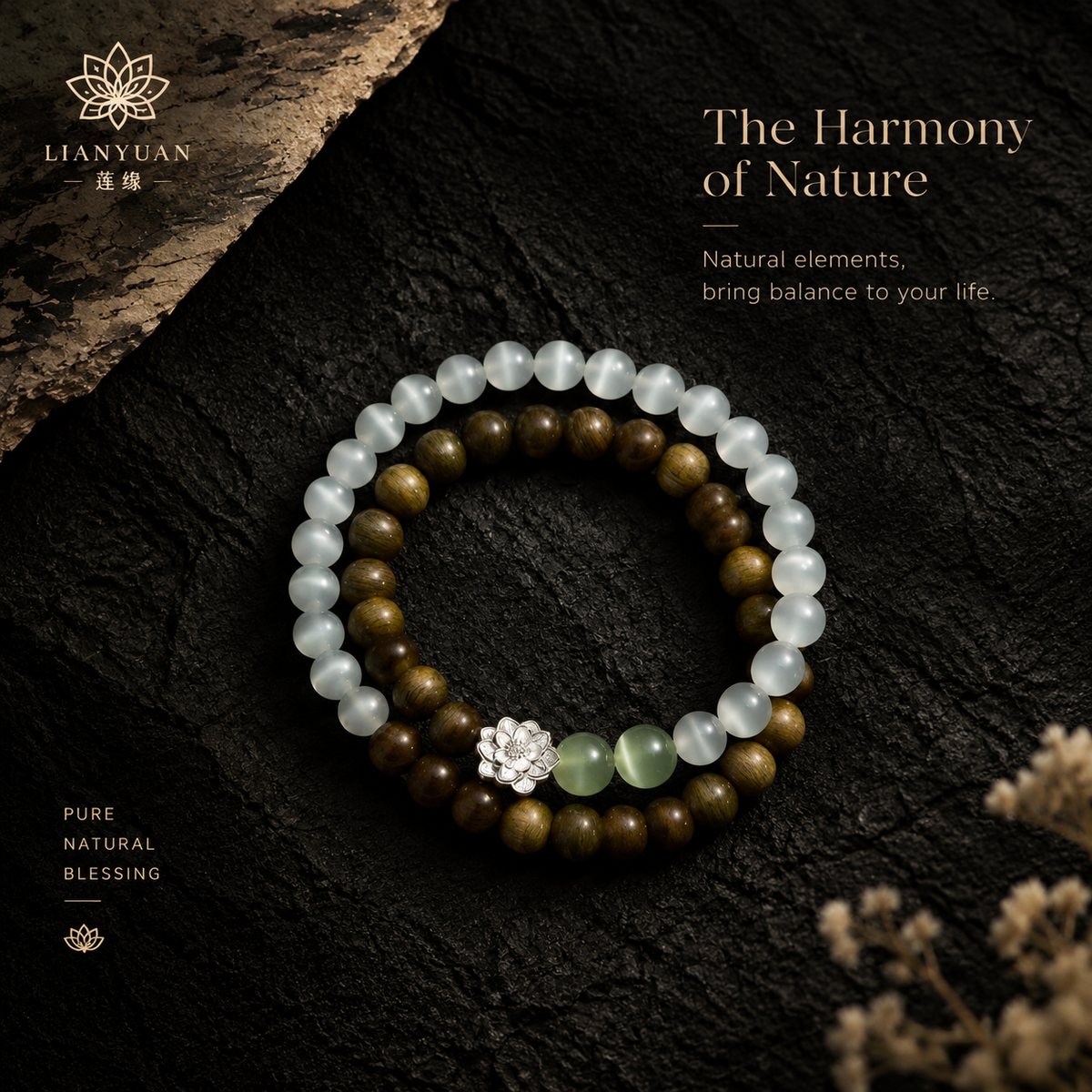
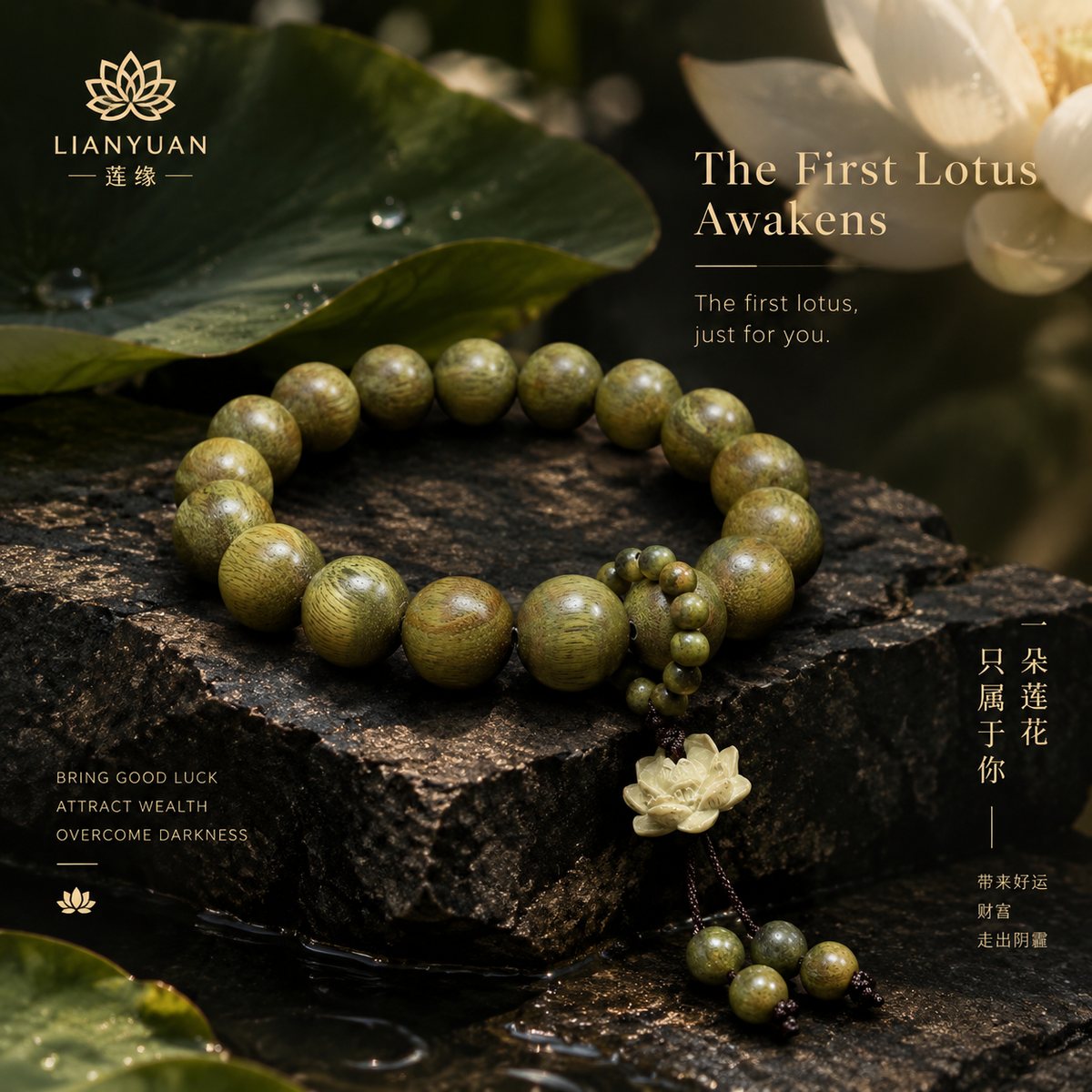
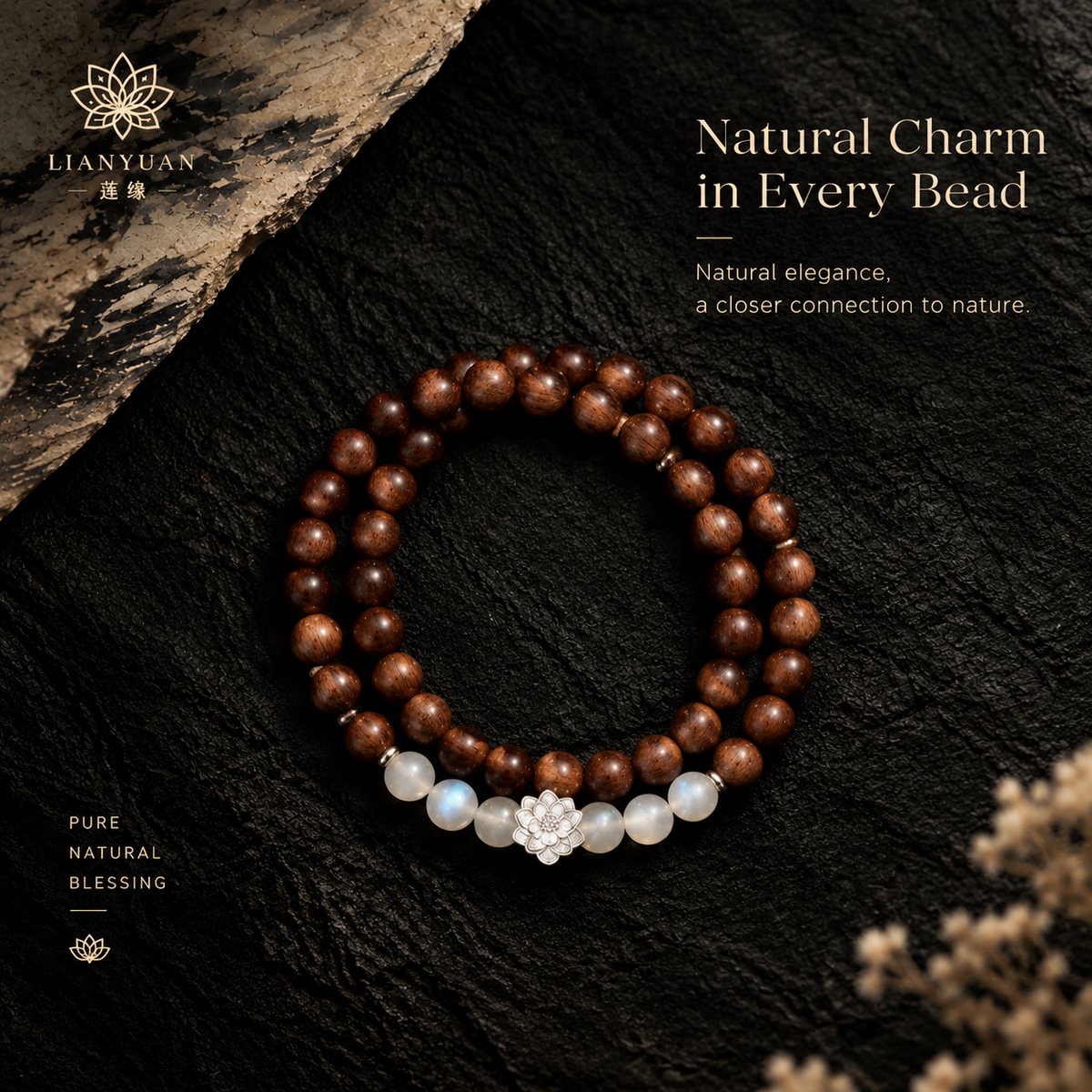
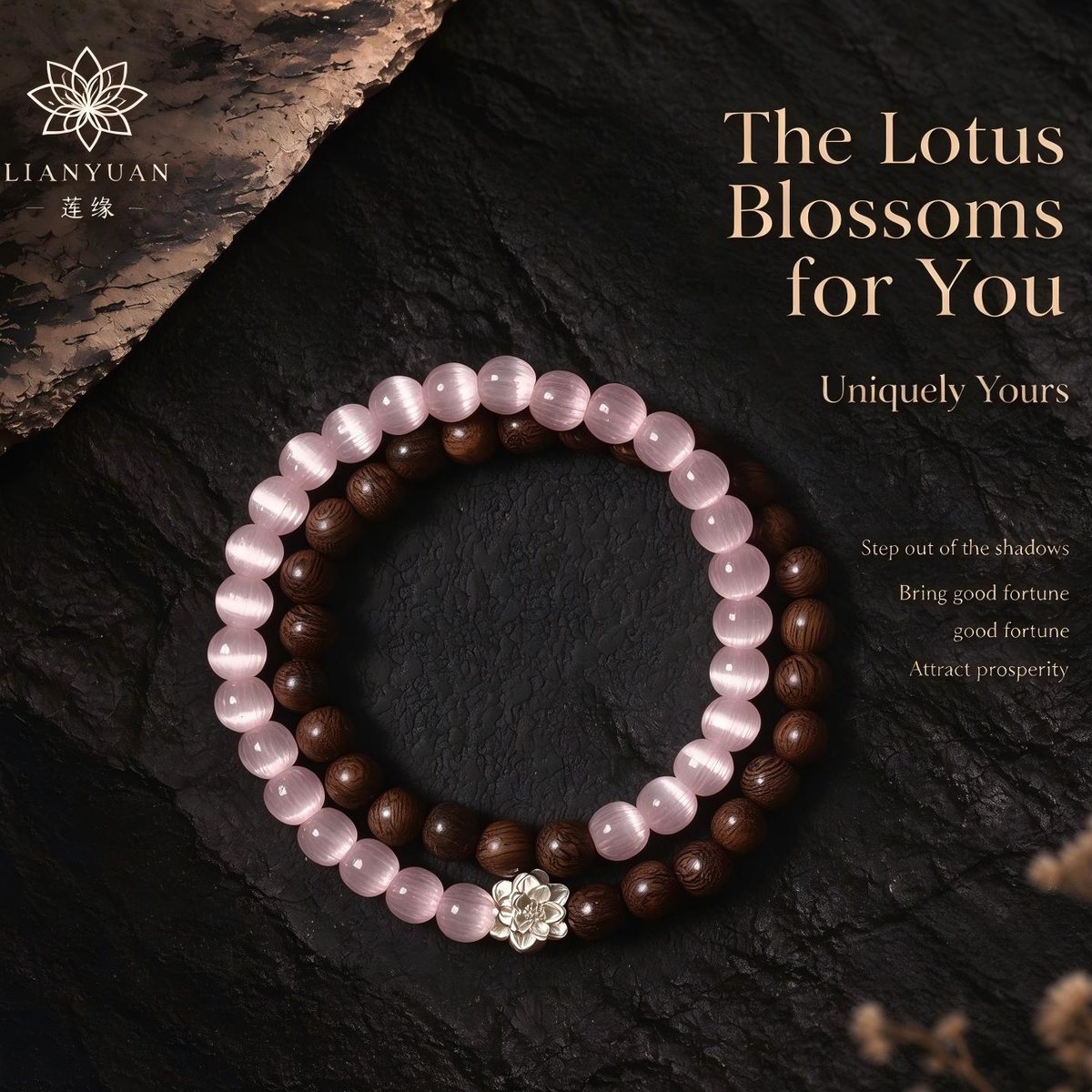
Sandalwood is warm, light, and carries its own quiet scent. It is the choice for someone who wants a piece that changes with wearing and softens over years. Its cost is patience: it marks, it darkens, and it will never look brand new again. Many people find that the point. Lotus imagery suits a period of healing or a fresh start, the flower that opens above dark water. If you want a piece with no symbolism beyond simplicity, choose the plain wood and the single knot. There is no wrong answer here.
檀木温暖、轻,自带一股安静的气味。它适合想要一件随佩戴而变、越戴越柔和的物件的人。它的代价是耐心:它会留痕、会变深,永远不会再像全新那样。很多人觉得,这正是要点。莲花意象适合一段疗愈期,或者一个新的开始,那是从暗水之上打开的花。若你想要一件除朴素之外别无象征的物件,就选素木和单个绳结。这里没有错误答案。
Match the material to the way you live. If you work with your hands or spend hours outdoors, choose a plain matte finish that hides wear. If the bracelet is mostly a desk piece, you can afford a finer bead and a softer tone. Buy for your real week, not for an imagined one. And for a first talisman, choose one. A single object earns meaning through repetition, and you can always add a second later.
让材质配合你真实的生活方式。如果你用手干活,或长时间在户外,就选哑光素面、能藏住磨损的款式;如果手串多半是案头之物,你可以选更细的珠子、更柔的色调。为你真实的那一周而买,而不是为想象中的那一周。第一件信物,只选一件。一件物品靠重复获得意义,第二件以后随时可以再加。
Is a bracelet a good gift?
手串适合当礼物吗?
It is a quiet gift, which is why it travels well. It carries meaning without being personal or expensive in a way that creates pressure. Choose a plain design and an elastic or sliding cord if you do not know the size, and write a short note about why you chose it. The note is what they will keep.
它是一件安静的礼物,所以很好送。它有意义,却不私密,也不昂贵到让人有压力。不知道尺寸时选朴素款式和弹力绳或滑结;再附一张短信,写上你为什么选它。真正会被留下的,是那张字条。
How do I measure my wrist size?
怎么量手腕尺寸?
Use a soft tape or a strip of paper around the wrist, just below the wrist bone, snug but not tight. Note the number in centimeters and add about one for a close fit, or two for a looser one. If you are between sizes, choose the larger. When in doubt, an elastic cord forgives a small error.
用软尺或一条纸带绕过手腕,位置在腕骨下方,贴而不勒。记下厘米数,贴身佩戴加一厘米左右,偏松则加两厘米。处在两个尺寸之间时,选大的那一个。拿不准就选弹力绳,它能容下小误差。
Which material should I choose?
我该选哪种材质?
Sandalwood is the everyday choice: warm, light, faintly scented, and it ages with use. If you want a piece that stays uniform, choose a wood with a plainer grain. If you want symbolism, the lotus and knot designs carry the old imagery. The material is not a promise. Choose the one you will enjoy touching.
檀木适合日常:温暖、轻,带一点气味,会随使用变旧变好。如果你想要一件保持匀净的物件,就选木纹更素的木料。如果你想要象征,莲花与绳结的款式承载着那套古老的意象。材质不是承诺。选一件你愿意去摸的。
I want to wear it every day. Which should I pick?
我想每天都戴,该选哪一件?
Pick something small, matte, and comfortable enough to forget. Everyday wear means showers are skipped, hands are washed, and sleeves rub against it, so a plain finish and a strong cord matter more than detail. Eight millimeter beads on an elastic cord are the most forgiving choice for daily use.
选小而哑光、舒服到会让你忘记的那一件。日常佩戴意味着洗澡时要摘下、洗手要碰水、袖子天天摩擦,所以素净的表面和结实的绳子,比细节更重要。八毫米珠子配弹力绳,是日常佩戴里最宽容的选择。