
The guide · Cord
The oldest kind of promise, tied by hand.
The oldest kind of promise
The cord · hand-tied, red or black
A hand-tied knot is older than writing. In the East it has always been a mark of keeping: a bow to fate, and a mercy toward yourself. The cord turns a bead into a promise.
It holds without gripping. That is the difference between a promise and a cage, and it is the thing the knot has been teaching for a thousand years.
The cord pieces
Things that bind
Cord, knot, and mala: a short guide
绳、结与念珠:一份简短的指南
Before the bead, there is the cord. It carries the weight of everything strung on it, and it is usually the part no one looks at. A hand-tied bracelet is judged by its knots, because the knots are where a person slowed down long enough to make them.
珠子之前,先有绳。它撑着上面的一切,却常常是没人会多看一眼的部分。一条手打绳结手串好不好,看的正是那些结,因为结是匠人曾经慢下来的地方。
The cord and the knot
绳与结
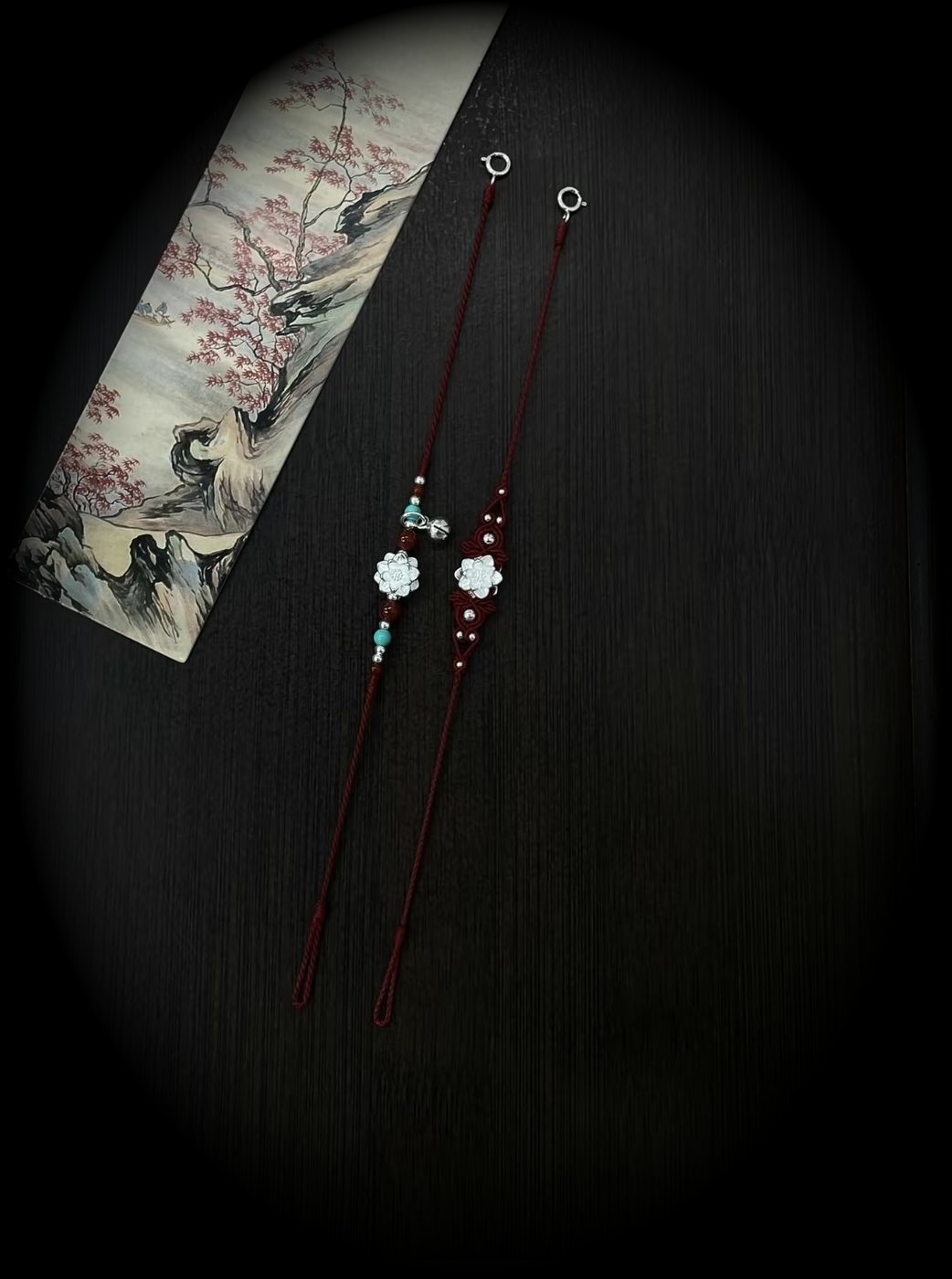
A cord bracelet is simple by design. One length of string, a row of beads, and a series of knots holding them apart. The cord does two jobs. It keeps the piece on the wrist, and it sets the rhythm between the beads, so they do not slide into a single lump. Good cord is firm, slightly waxed, and resistant to fraying. It is also the first part to wear out, which is why makers leave enough length to retie it.
绳结手串天生简单。一根线,一排珠子,几个把珠子隔开的结。绳做两件事:把手串留在腕上,也隔出珠子之间的节奏,让它们不会挤成一堆。好绳子结实,微微上蜡,不容易起毛。它也是最早磨损的部分,所以匠人会多留一段长度,方便以后重新打结。
Hand-tied bracelet work is slow. Each knot is pulled by hand and set with even tension, one after another. Machines can imitate the result, but they rarely make the small variations that tell you a person was there. A good knot is also adjustable, so the bracelet can be loosened in summer and tightened in winter. The red string bracelet follows the same logic. The color carries meaning in many Eastern traditions, but the knot carries the structure.
手打绳结是个慢活。每个结都用手拉紧,力道匀称,一个接一个。机器可以模仿结果,却很少做出那种细微的差别,而差别恰恰说明有人在这里待过。好的结还能调节,夏天松一点,冬天紧一点。红绳手串也是同一个道理。红色在许多东方传统里有它的含义,但撑住结构的,是结。
The mala and its 108 beads
念珠与一百零八颗
A mala is a strand used for counting. In Buddhist practice the traditional count is 108 beads, a number with a long history and many explanations. Some link it to the number of human afflictions, others to older systems of counting prayer. A sandalwood mala usually keeps the full count, worn long or wrapped twice around the wrist. Smaller wrist malas use 21 or 27 beads, which divide evenly into 108 and remain easier to carry.
念珠是用来计数的。佛家传统里是一百零八颗,这个数字来历很久,说法也多。有人把它联系到人的种种烦恼,有人追溯到更早的计数方式。檀木念珠通常保留完整的数目,长长地挂着,或者在腕上绕两圈。腕上的小念珠用二十一颗或二十七颗,都能整除一百零八,也更方便随身。
What matters is not the number but the loop. You pass one bead between your fingers each time you breathe, and the strand gives the mind something steady to hold. Mala beads are not a tool for getting somewhere. They are a way to stay still for a few minutes. Some people count prayers. Others count breaths. The beads do not care which. They only need to be turned, slowly, until the noise in the head quiets a little.
重要的不是数字,而是那个循环。呼吸一次,手指就把一颗珠子推过去,整串给了心一个可以稳稳抓住的东西。念珠不是用来「到达」哪里的工具,它只是让你安静地待上几分钟。有人数的是愿,有人数的是呼吸。珠子不介意是哪一种。它只需要被慢慢地转过,直到脑子里的声音轻一点。
Wearing a cord bracelet
佩戴绳结手串
A cord bracelet can be worn on its own or beside a sandalwood bracelet, a white lotus piece, or a simple silver band. There is no correct order. Many people build a small stack over months, adding a piece for something they went through. This is how Eastern wisdom jewelry tends to grow, one marker at a time, without a plan. A mindfulness bracelet earns its place by being worn.
绳结手串可以单戴,也可以和檀木手串、白莲、或者一枚素银一起戴。没有哪个顺序是对的。很多人会用几个月慢慢攒出一小叠,每加一件,背后都有一段自己走过的路。东方的信物常常就是这样长起来的,一件一件,没什么计划。正念手串靠被戴出来,而不是靠和别人配得上。
Care is modest. Keep the cord away from long soaks, but let it live on the wrist. If a knot works loose, retie it rather than replacing the piece. Cord softens with wear and darkens at the edges, which is usually a sign it has been somewhere. If the strand ever breaks, that is not a failure. It means the bracelet did its job, and the beads can be strung again.
养护不难。别让它长时间泡水,但让它留在腕上。如果哪个结松了,重新打一次就好,不必整条换掉。绳子会随着佩戴变软,边缘也会变深,这通常说明它去过一些地方。万一哪天断了,那也不算失败。说明它尽完了自己的本分,珠子重新串一遍还能继续。